
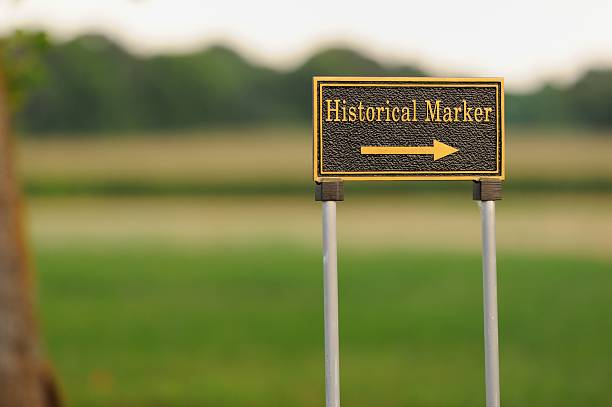
Textbooks provide a strong foundation for our collective history, but reading text can feel disconnected from reality. The best public education occurs when people can relate historic events to the real world around them. The historical markers come in handy here; they serve as a permanent and inspirational teaching tool, seamlessly connecting past centuries with the present day. These monuments make our roadway a place to learn and grow by sharing free knowledge along the way.
Transforming Spaces into Classrooms
Historical markers meet people exactly where they are in their daily lives. A plaque, either on the side of the road for a walk to work or on a wall in a park, makes a difference to anyone who sees it. These signs are installed over the course of decades by a variety of dedicated heritage societies such as the Native Sons of the Golden West, founded in 1875 by General A.M. Winn to honor the Gold Rush period of 1849. The California historical markers program’s page is one example of the resources available to check out to understand how community efforts bring together these markers into a network of public knowledge. These physical signs make learning a natural part of the daily environment, ensuring local stories are never forgotten by modern citizens.
Making Abstract History Tangible

The story is now real when a historic event is documented on a physical bronze or stone plaque. Being on the site on which an early community was established grants a sense of emotional and powerful connection – that can’t be achieved through a classroom lecture. Markers give short, simple descriptions of significant events, distilling complex local history to simple sentences. This firsthand contact enables people to see vividly the hardships and successes of the history of these places vividly, fostering an appreciation of the variety of people who have inhabited them.
Encouraging Independent Lifelong Learning
Traditional education often ends at graduation, but historical markers promote continuous learning throughout a person’s life. They serve as silent enticements to further investigation by the curious. A brief paragraph on a roadside plaque can spark a lifelong passion for heritage preservation or inspire someone to visit local historical archives. These are open, free and accessible to all at all times, eliminating traditional socioeconomic barriers to access to education and making it possible for anyone to learn to be a local historian, at their own speed.
Supporting Formal School Curriculums
Historical markers are valuable and very effective, no-cost instructional tools for primary and secondary level teachers. Taking students on field trips to the community will help them see what they are learning about in the books. Working with neighborhood organizations such as the California Landmark Foundation also ensures that teachers have safe places to teach experiential education activities. A trip to the monument makes it easier to remember history, and transforms an ordinary school day into an unforgettable education adventure.
Conclusion
Historical markers are essential to public education, as they both convey knowledge and beautifully democratize it, yet at the same time cleanly keep community heritages alive. When they convert mundane public space and turn it into classrooms, they are able to infuse the geography around them with profound historical meaning for modern citizens. These mini-situations offer fully accessible, educational access for all passers by, encouraging independent study and complementing school teaching at the same time. Today’s cities are rapidly evolving, but our historical markers are necessary in order to insure that the lessons of the past are “always there” to guide the leaders of tomorrow in a thoughtful manner.